
Products commonly in scope
- Passenger cars in category M
- Light commercial vehicles in category N with a gross vehicle weight below 3.5 tonnes
- Powered motorcycles and other category L two-wheel vehicles
- Powered three-wheel vehicles
- Motor quadricycles
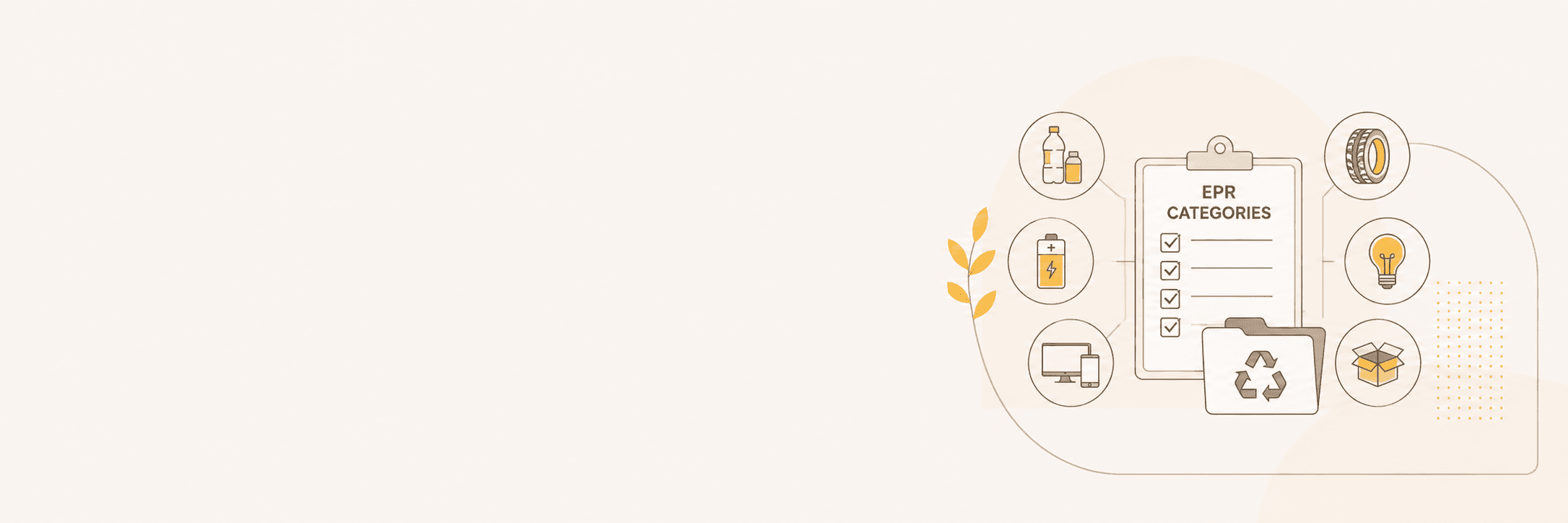
French EPR category guide
French vehicle EPR guidance covering producer registration, IDU numbers, end-of-life vehicle obligations and related product streams.
Category overview
The French vehicle EPR stream covers new vehicles in categories M and N within the applicable weight limit, together with category L powered two- and three-wheel vehicles and quadricycles. Manufacturers and first importers must identify the responsible producer entity and coordinate end-of-life, registration and data obligations.
EPR scope is product-specific. A product can fall under several streams, and its packaging may create an additional obligation. Confirm the current official scope before placing products on the French market.
Scope assessment
These examples are a starting point, not a substitute for checking the detailed legal and eco-organization nomenclature.
The vehicle category under French road rules must be confirmed before selecting the EPR route.
Tyres, batteries and lubricating oils contained in a vehicle can create additional, separate EPR obligations.
End-of-life vehicle collection, treatment, traceability and circular-parts requirements extend beyond registration alone.
Compliance roadmap
Registration is only one part of compliance. Product classification, declarations, records and post-registration duties must remain aligned.
Map each product against the official stream definitions. Review function, materials, intended user, sales channel, components and packaging instead of relying only on customs codes or catalogue labels.
Establish who first places the product on the French market. Depending on the supply chain, this may be a manufacturer, importer, private-label seller, distance seller or marketplace.
Most producers join an approved eco-organization. An approved individual system may be possible, but it carries direct operational, collection, treatment and reporting responsibilities.
Complete the relevant onboarding, provide company and product information and obtain the unique identifier for this EPR stream. Each applicable stream can issue a separate IDU.
Submit products first placed on the French market using the required units, weights and category codes. Eco-contributions are normally calculated from these declarations.
Keep auditable records, renew declarations, monitor fee schedules and eco-modulation, and apply any stream-specific sorting, take-back, consumer-information or prevention obligations.
Declaration readiness
Reliable source data reduces classification errors and makes recurring declarations easier to audit. Keep the calculation method and source records alongside every submitted return.
Declaration periods, category codes, fee scales and minimum contributions vary by eco-organization and stream. Confirm the current member guide before calculating a return.
Vehicle category, type and model
Number and mass of new vehicles placed on the market
Powertrain, brand and technical classification
Tyres, batteries and lubricating oils supplied with the vehicle
Sales route, producer entity and end-of-life arrangements
Supplier evidence, internal calculations and copies of submitted declarations
Cross-stream review
EPR categories overlap by design. Assess the complete product, incorporated components, accessories, printed inserts and packaging.
Common questions
The stream covers category M passenger vehicles, category N light commercial vehicles below 3.5 tonnes, and category L powered two- or three-wheel vehicles and quadricycles. The precise road-vehicle classification should be verified.
No. Vehicle, tyre, battery and lubricant obligations are separate EPR streams. A producer may therefore need several registrations and IDU numbers for the same vehicle placed on the French market.
No. The IDU is stream-specific. A company covered by several streams can hold several unique identifiers and must maintain the registration and declarations for each one.
It may need to register when it directly places covered products on the French market, including through distance sales. The answer depends on the contractual chain, customer and role of any importer or marketplace.
Category assessment
We can review your products, identify overlapping streams and prepare the information needed for French registration and IDU applications.
This page provides general information and is not legal advice. Product scope, approved schemes, fees and reporting rules can change. Confirm the rules that apply when your products are placed on the French market.